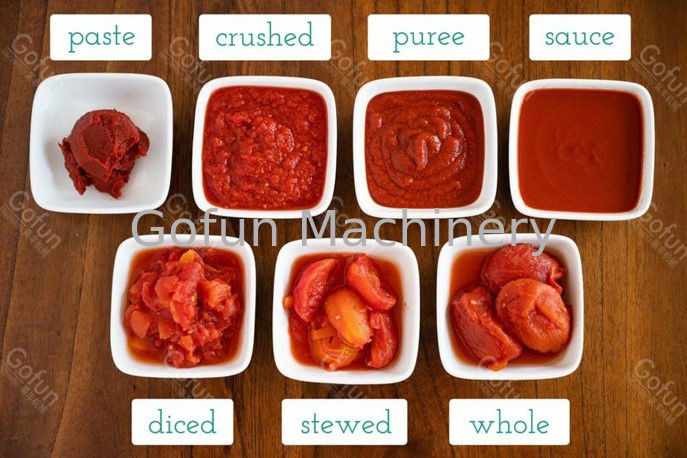
Tomato Paste Making Machine | From Fresh Tomato to Thick Paste in One Line
The Tomato Paste Processing Line is an industrial-scale system engineered for producing high-concentration tomato paste intended for further manufacturing into ketchup, pizza sauce, soup bases, and ready meals. This line is designed for tomato processors supplying B2B customers such as food manufacturers, export traders, and institutional kitchens who require paste with 28 to 38 degrees Brix or even higher concentrations up to 42 degrees Brix.
Raw Material Preparation
The process begins with fresh, ripe tomatoes arriving at the reception hopper. An elevator feeds the tomatoes into a rotary washer equipped with high-pressure water sprays and a paddle agitator to remove dirt, insects, and surface residues. After washing, an inspection conveyor allows manual sorting to reject damaged or green tomatoes. A final rinse ensures all foreign matter is eliminated before crushing.
Hot Break or Cold Break Options
This line offers both hot break and cold break processing methods. The hot break method heats tomatoes rapidly to 90 to 95 degrees Celsius immediately after crushing, inactivating pectinolytic enzymes that would otherwise degrade natural pectin. This results in higher viscosity paste ideal for ketchup and pizza sauces. The cold break method uses lower temperatures around 60 to 65 degrees Celsius, producing thinner paste with fresher flavor suitable for juice blending. Customers can choose either configuration or a dual-mode system.
Extraction and Refining
After heating, the crushed tomatoes pass through a twin-stage finisher. The first stage uses a 1.5 millimeter screen to remove coarse materials such as skins and seeds. The second stage employs a 0.8 millimeter screen for finer texture, producing a homogeneous tomato pulp. The extracted pulp is then directed to the evaporation section.
Complete Production Process
FRESH TOMATO ⇒ CONVEYOR ⇒ WASHING ⇒ SORTING ⇒ CRUSHING ⇒ PREHEATING ⇒ PULPER & REFINER ⇒ EVAPORATING ⇒ STERILIZING ⇒ ASEPTIC FILLING ⇒ STORAGE OR BLENDING

Key Features
- Food-grade 304 stainless steel construction meeting FDA/CE standards
- Intelligent temperature control (±1℃ precision) for consistent quality
- Energy-saving design reducing operational costs by 25-30%
- Customizable capacity from 500kg/h to 10t/h
- PLC smart control system for automated operation
- Easy-to-clean structure with minimal maintenance requirements
- Versatile for various sauce types and packaging formats
Technical Specifications
| Product Name |
One-stop solution for tomato processing line |
| Fresh Fruit Input Capacity |
500kg per hour ~ 25 tons per hour |
| Raw Material |
Fresh tomato, tomato paste |
| End Product |
Tomato paste, tomato sauce or ketchup, tomato juice, etc |
| Final Product Brix |
28%~30%, 36%~38% |
| Main Machine Material |
Food grade SUS304 or SUS316 |
| Warranty |
12 months after commissioning |
This state-of-the-art tomato paste processing line integrates multiple operations, focusing on the complete tomato processing journey from initial raw material treatment to final product packaging. As a versatile production system, this line efficiently manufactures various tomato-derived products including tomato paste, tomato sauce, and tomato juice, spanning all essential processing stages.
Raw Material Preparation
The system includes comprehensive screening and cleaning components, where a vibrating screen eliminates flawed tomatoes and impurities while a high-pressure bubble cleaning machine with brush rollers thoroughly cleanses surfaces by removing mud, pesticide residues, and unwanted particles. Flexible conveying mechanisms prevent damage to tomato skins, establishing a pristine base for processing.
Crushing and Pulping
Following pretreatment, tomatoes are processed through a spiral crusher in low-temperature settings to retain nutrients and flavor. A double-stage pulping machine separates tomato pulp from peel and seeds, with the first stage eliminating larger impurities and the second stage providing fine pulping for desired consistency.
Concentration and Sterilization
Tomato pulp undergoes concentration in a vacuum concentration tank where excess water is extracted in a low-temperature vacuum environment (60-70°C). Solid content is concentrated between 10% to 30% as per specifications, preserving lycopene and essential nutrients. Concentrated pulp proceeds to tubular sterilizer using rapid high-temperature sterilization (121°C instant sterilization) to eradicate microorganisms while preventing flavor degradation.
Final Product Packaging
Sterilized tomato products are meticulously dispensed into packaging containers through an aseptic filling system maintaining an aseptic environment to prevent secondary contamination. Capping, sealing, labeling, coding, and boxing complete the packaging process, with some lines incorporating metal detection and weight detection systems to eliminate substandard products.
Final Products & Packaging
Available Packaging Options
- Aseptic bags
- Metal cans
- Sachets
- Stand-up pouches
- PP containers
- Glass bottles
- PET bottles
- Gable tops
Comprehensive Solutions
Technical Support
- Technical consultation
- Customized proposal design
- Equipment manufacturing
Implementation Services
- Installation, commissioning, and on-site training
- One-year after-sales guarantee
- Lifelong service
Additional Support
- Package design and purchasing support
- Marketing suggestions
- Factory building and design
After-Sales Service
- Debugging equipment
- Overseas technical support
- Overseas equipment maintenance
- English speaking engineers available


 Home
>
Products
>
Tomato Processing Line
>
Home
>
Products
>
Tomato Processing Line
>