
 Home
>
PRODUCTS
>
Tomato Processing Line
>
Home
>
PRODUCTS
>
Tomato Processing Line
>

|
|
| Place of Origin | Shanghai |
| Brand Name | Gofun |
| Certification | CE, ISO certificate |
| Model Number | GFM-MPL |
Tomato Processing Line | Complete Juice & Paste Plant | From Fruit Reception to Aseptic Packaging
Are you currently operating separate lines for juice and paste—or worse, discarding valuable tomato pulp because you lack the equipment to process it?
A fully integrated tomato processing line unlocks the full economic potential of your tomato supply. Instead of choosing between juice and paste, a well-designed plant can produce both—capturing value from every kilogram of raw fruit and adapting your product mix to market demand as seasons change.
The complete tomato processing workflow — from field to package:
Stage 1: Reception and Washing — Fresh tomatoes arrive via truck and are unloaded into a water flume system for initial cleaning. A reciprocating washer removes dirt and debris, while a sorting table allows manual inspection to remove defective fruit. Some advanced lines integrate automatic color sorters that use optical sensors to reject green or spoiled tomatoes before they enter the processing stream.
Stage 2: Crushing and Preheating — Washed tomatoes are crushed into a pulp, then rapidly heated to 85–90°C in a tubular preheater. This inactivates enzymes that would otherwise cause separation of liquid and solids (serum separation) and softens the fruit tissue for efficient pulping.
Stage 3: Pulping and Refining — A double-pass finisher or pulper separates the pulp from skins, seeds, and stems. High-quality finishers with adjustable screen gaps can improve juice yield by 2–3% compared to conventional designs. For juice production, the refined pulp may be further homogenized and blended.
Stage 4: Juice or Paste — The Production Split:
For Juice: The refined juice is formulated with sugar and acid to meet target Brix levels, deaerated, homogenized, and sterilized via UHT (Ultra-High Temperature) treatment before aseptic filling into bottles, cans, or cartons.
For Paste: The refined pulp proceeds to multi-effect vacuum concentration, as detailed above, then to sterilization and aseptic packaging.
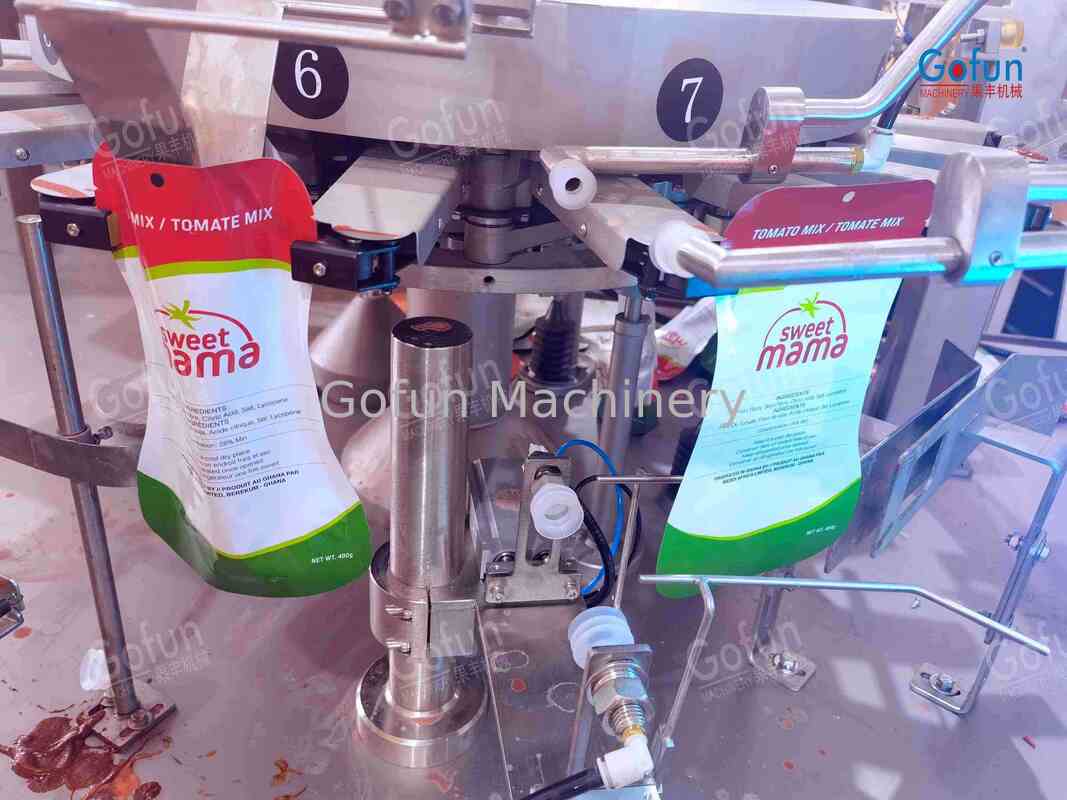
Flexible packaging options across both product lines — Tomato juice can be filled into PET bottles, glass jars, metal cans, or Tetra Pak-style cartons. Tomato paste is typically packed in 5–220L aseptic bags for bulk export, or in cans and jars for retail.
Engineering for energy efficiency — The entire line is designed with heat recovery in mind. Vapor recompression systems, condensate return, and optimized pipeline layouts reduce steam consumption by up to 30% compared to conventional designs.
| Product Name | One-stop solution for mango processing line |
|---|---|
| Fresh Fruit Inlet Capacity | 500kg per hour ~ 25 tons per hour, customized |
| Raw Material | Fresh mango |
| End Products | Mango pulp puree, Mango concentrate, Mango sauce, Mango juice, Mango beverage |
| Final Product Brix | 14%~20% |
| Final Package Options | Aseptic bag, Aluminum can, Stand-up pouch, PP container, Plastic bottle, Glass jar, Gable top carton box, Tetra pack, etc |
| Machine Material | Food grade SUS304 or SUS316 |
| Warranty | 12 months after commissioning |
| Operator Requirement | About 10~12 persons |
| Voltage | 380V 50Hz/ 110V 60Hz/ 415V 50Hz (adjustable to client's country standard) |
| Advantages | Energy-saving, High efficiency, Water-saving, Stable performance |
Contact Us at Any Time